How to Fix an Office Chair That Is Too Small for a Tall Person
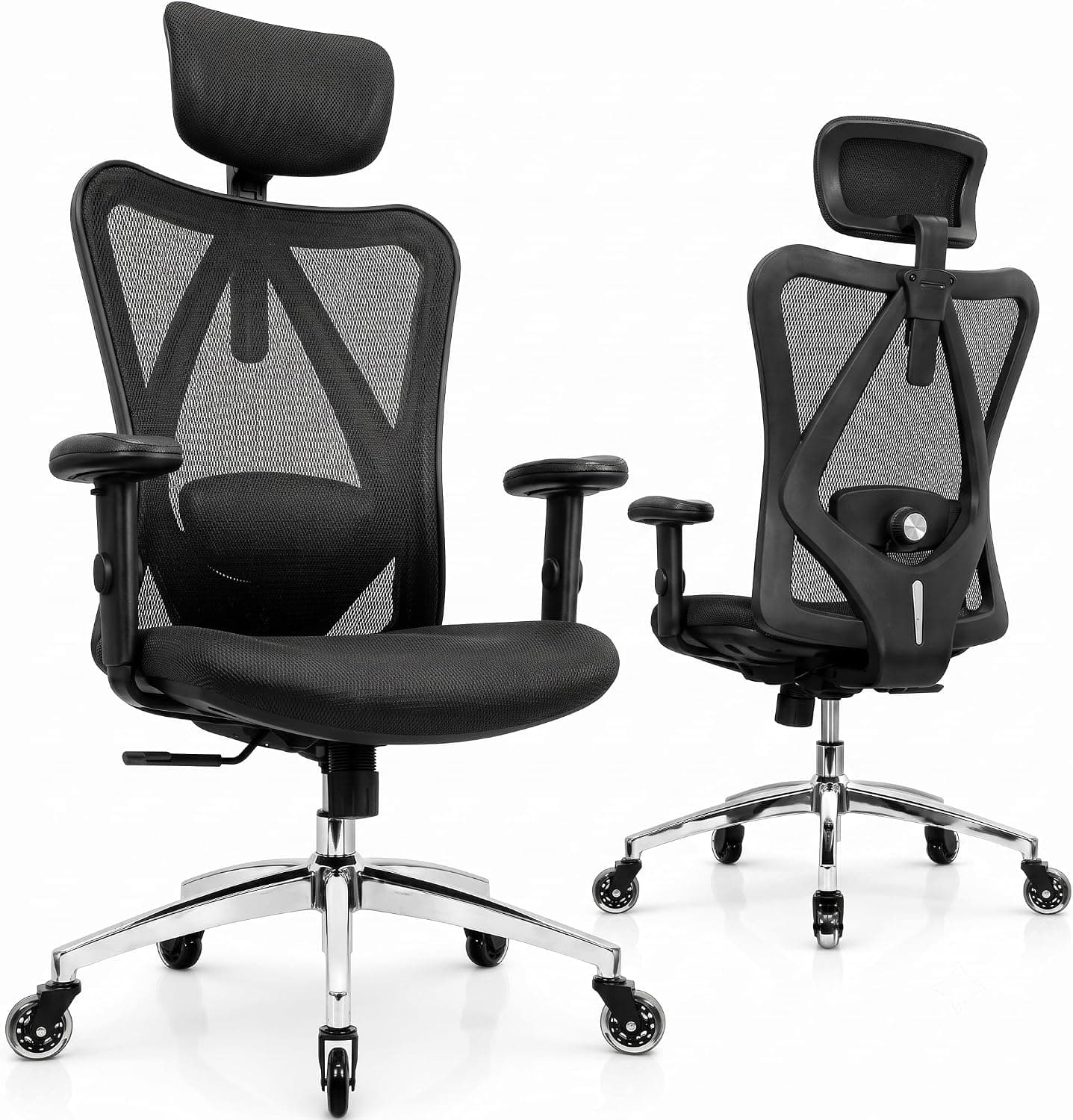
Most office chairs are designed around average heights, so tall people often sit with knees higher than hips, thighs unsupported and the backrest ending mid-back. The result is pressure behind the knees, lower back pain and constant shifting. Some fixes are simple adjustments, while others show it is time for a chair with a longer seat and taller back.
Signs the chair does not fit
If your knees sit noticeably higher than your hips at the chair's maximum height, the seat height range is too low for you. That position tilts the pelvis backwards, rounding the lower back and making you slide forward over the day.
Pressure or numbness along the backs of your thighs usually means the seat is too short and your legs are hanging off the front edge. A backrest that ends below your shoulder blades or a headrest that hits your neck are other clear signs the chair is sized for shorter users.
Adjust what you can first
Raise the seat to its highest position so your feet rest flat with knees near hip level, then raise the desk or add a keyboard tray so your elbows still sit around 90 degrees. Many tall people keep chairs too low because the desk is too low.
If the chair has a seat slider, move the seat forward so there are two to three fingers of space between the seat edge and the back of your knees. Adjust lumbar support upward to meet the curve of your lower back, which sits higher on a tall torso.
Low-cost fixes
A firm seat cushion can add a little height and support if the gas cylinder is too short, but check it does not push your knees above your hips or reduce armrest height too much. A separate lumbar pillow placed higher than the built-in support often helps with lower back pain.
Some chairs accept a taller replacement gas cylinder, which increases seat height. Check compatibility with the manufacturer, since cylinders must match the chair base and weight rating.
What to look for in a new chair
Look for a high seat height range, a seat depth adjustment or a naturally deep seat, a tall backrest that supports your shoulder blades and an adjustable headrest if you lean back. Check the maximum user height and weight ratings in the specifications.
Adjustable armrests with enough height range matter as well, since short armrests force tall users to hunch. Many chairs marketed as big and tall add width rather than length, so compare seat depth and backrest height, not just the label.
Check the whole workstation
Even a well-fitting chair causes discomfort if the desk and monitor are too low. Tall users often need a desk around 30-32 inches for sitting and a monitor raised so the top of the screen sits near eye level.
Take short breaks to stand and move every hour. A standing desk with a high maximum height lets tall users alternate positions without hunching over a surface built for average heights.