Topo by Ergodriven Premium Not-Flat Anti-Fatigue Standing Desk Mat Review (2026)
Updated September 14, 2026 · Research-based review
Our verdict
Topo suits anyone who stands most of the workday and wants a mat that keeps them shifting instead of locking into one spot. The raised, not-flat terrain and built in stretch zones are the standout feature, though the price sits well above basic flat foam mats and a desk chair does not roll over it easily.
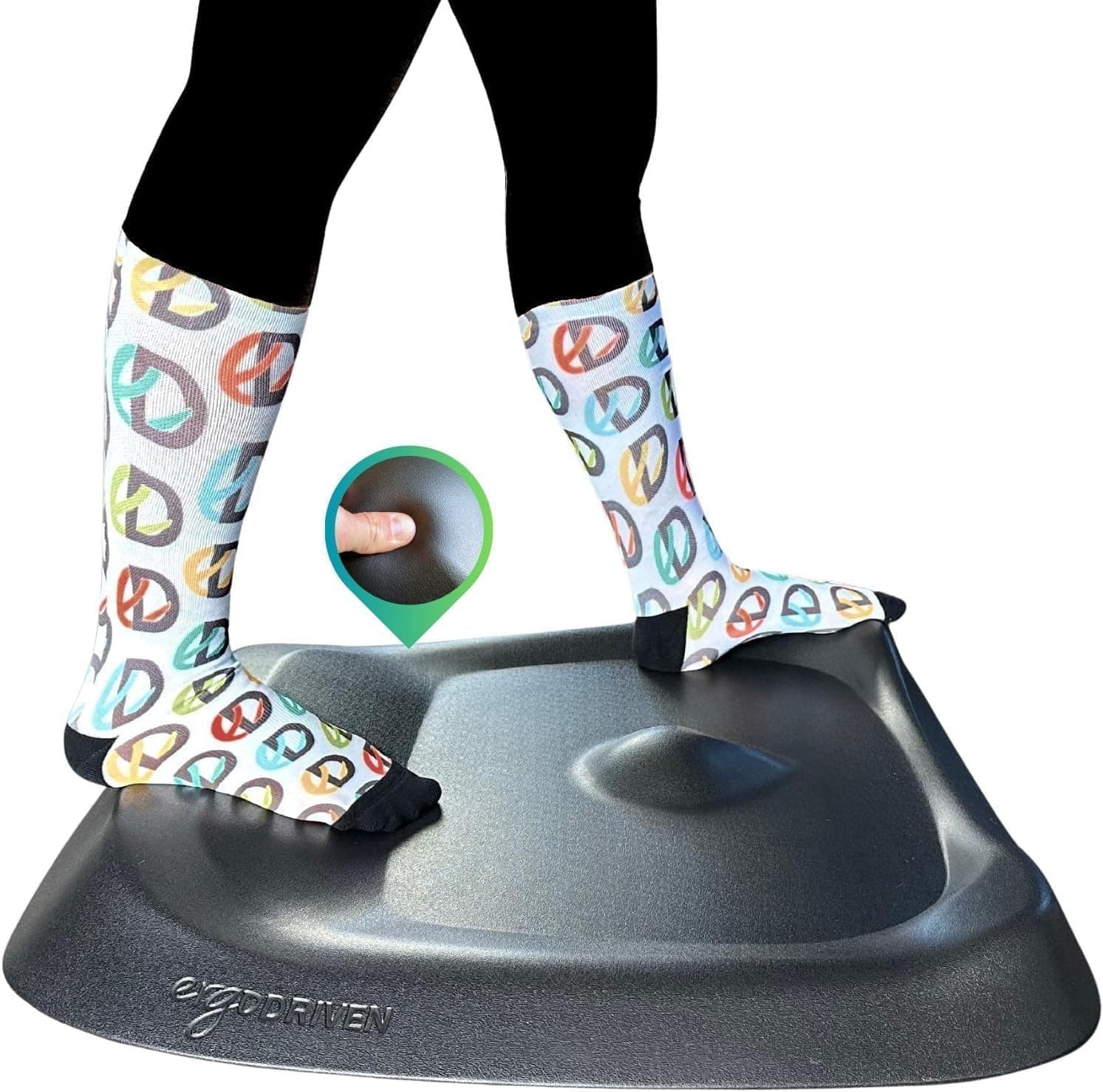
Topo by Ergodriven's premium not-flat anti-fatigue mat, a contoured standing desk mat that encourages movement and stretching.
Price range: See on Amazon
What we liked
- + Not-flat terrain encourages shifting stance to reduce fatigue
- + Raised areas let you stretch calves and feet while working
- + Premium Ergodriven design is a standing desk favorite
Trade-offs
- - Costs noticeably more than basic flat foam mats of similar size
- - Contoured surface makes rolling a chair over it awkward
Who Should Put This Under Their Feet
Topo is built for people who spend hours a day at a standing desk and find that even a good flat mat still leaves their feet and lower back stiff by mid afternoon. Ergodriven designed the surface around the idea that the real benefit of standing is movement, not just being upright, so the mat rewards shifting your weight, rocking side to side, and stretching your calves without you having to think about it. Tall standers in particular tend to notice the difference, since a taller frame puts more load through the ankles and lower back over a long shift, and the varied terrain gives those joints somewhere to go. It is less suited to someone who wants a mat only to look tidy under a desk or who plans to roll a chair on and off it through the day, since the raised zones are meant to be walked and stood on, not rolled over.
What the Terrain and Materials Actually Do
The standard Topo measures 29 inches along the desk by 26.25 inches deep, rises to about 2.7 inches at its tallest point, and sits around 0.85 inches thick in the flatter neutral zone, all molded from a single piece of non-toxic polyurethane foam with a pebbled integral skin. Ergodriven leaves out PVC, phthalates, PFAs and added flame retardants, which matters if you are sensitive to the chemical smell some foam mats give off out of the box. The company rates the mat for full performance up to about 240 pounds of user weight, with support tapering off gradually above that line rather than failing outright. At roughly 8 pounds, it is heavier than a flat rubber mat of similar footprint, which actually helps it stay put on hard flooring instead of sliding when you shift your stance.
Setting It Up and Keeping It Clean
There is effectively no assembly. You place Topo in front of your standing desk with the taller ridged section toward you or the desk, whichever orientation feels natural, and start standing on it; Ergodriven includes a link to an online startup guide with short videos showing a few stance positions to try in the first days. Most of the learning curve is simply getting used to the terrain rather than fighting a flat surface, and that adjustment period tends to be a day or two. Cleaning is straightforward: wipe the surface down with water, and for anything sticky or a coffee spill, a bit of mild soap is fine as long as you rinse it off and let the foam dry fully before standing on it again, since a damp surface underfoot is not pleasant or especially safe.
Where It Costs More and What You Give Up
The honest trade-off here is price. A basic flat foam mat, including some in this same roundup like the Vari Standing Mat, costs noticeably less for a similar footprint, and if all you want is cushioning underfoot, that gap is hard to justify on paper. The FEZIBO Anti-Fatigue mat is the closer rival in feel, since it also uses a contoured, not-flat surface with a foot massage pad, but Topo's terrain is more deliberately engineered around specific stretch zones rather than general texture. The other real downside is practical: because the surface is not flat, rolling an office chair across it, or even walking a wheeled cart over it, is awkward, so it works best in a true standing setup rather than a sit-stand desk you switch between often.
The Verdict and Who Should Look Elsewhere
For a dedicated standing desk user who is willing to pay a premium for a mat engineered around movement rather than pure cushioning, Topo earns its reputation as one of the most respected names in the category, backed by a 90-day refund window and a 16-year warranty against manufacturing defects. People under about 240 pounds and up to roughly 6 foot 5 get the most consistent performance from the standard size. If your budget is tight, if you frequently roll a chair across your floor space, or if you just want flat, simple cushioning without a learning curve, a conventional flat mat or the FEZIBO alternative will serve you better and cost less.
Frequently asked questions
How much weight can Topo support?
Ergodriven rates the mat for full performance up to about 240 pounds of user weight, with cushioning and support gradually tapering above that threshold rather than failing suddenly.
Can I roll my office chair over the Topo mat?
Not comfortably. The raised, not-flat terrain that makes the mat effective for standing also makes it awkward for chair casters, so it works best in a dedicated standing setup rather than a sit-stand desk you switch between often.
Is the mat made from safe materials?
Ergodriven states the mat is molded from non-toxic polyurethane foam without PVC, phthalates, PFAs or added flame retardants, according to the manufacturer's product page.
How do I clean the mat?
Wipe it down with water, and use a small amount of mild soap for sticky spots, then rinse thoroughly and let it dry completely before standing on it again.
Prices change often, so check the current price and availability on Amazon.
Check price on AmazonTall Folk Picks may earn a commission from the link above.